Installation & Maintenance
Framed Artwork with French Cleat System
Installation
Your framed artwork is equipped with a wooden French cleat hanging system, designed to provide a secure, flush presentation against the wall.
The unmounted cleat may have two pre-drilled mounting holes spaced 16" apart, allowing for direct attachment to standard wall studs. If these holes are not present, you can use a drill to place holes in the cleat, if desired. If stud placement does not align with your desired hanging location, appropriate wall anchors may be used for drywall or other wall materials. Always select hardware rated to support the weight of your artwork and wall material.
INSTALLATION TIP: A bubble level will make installation quicker and help ensure your artwork hangs straight.
Installation Steps
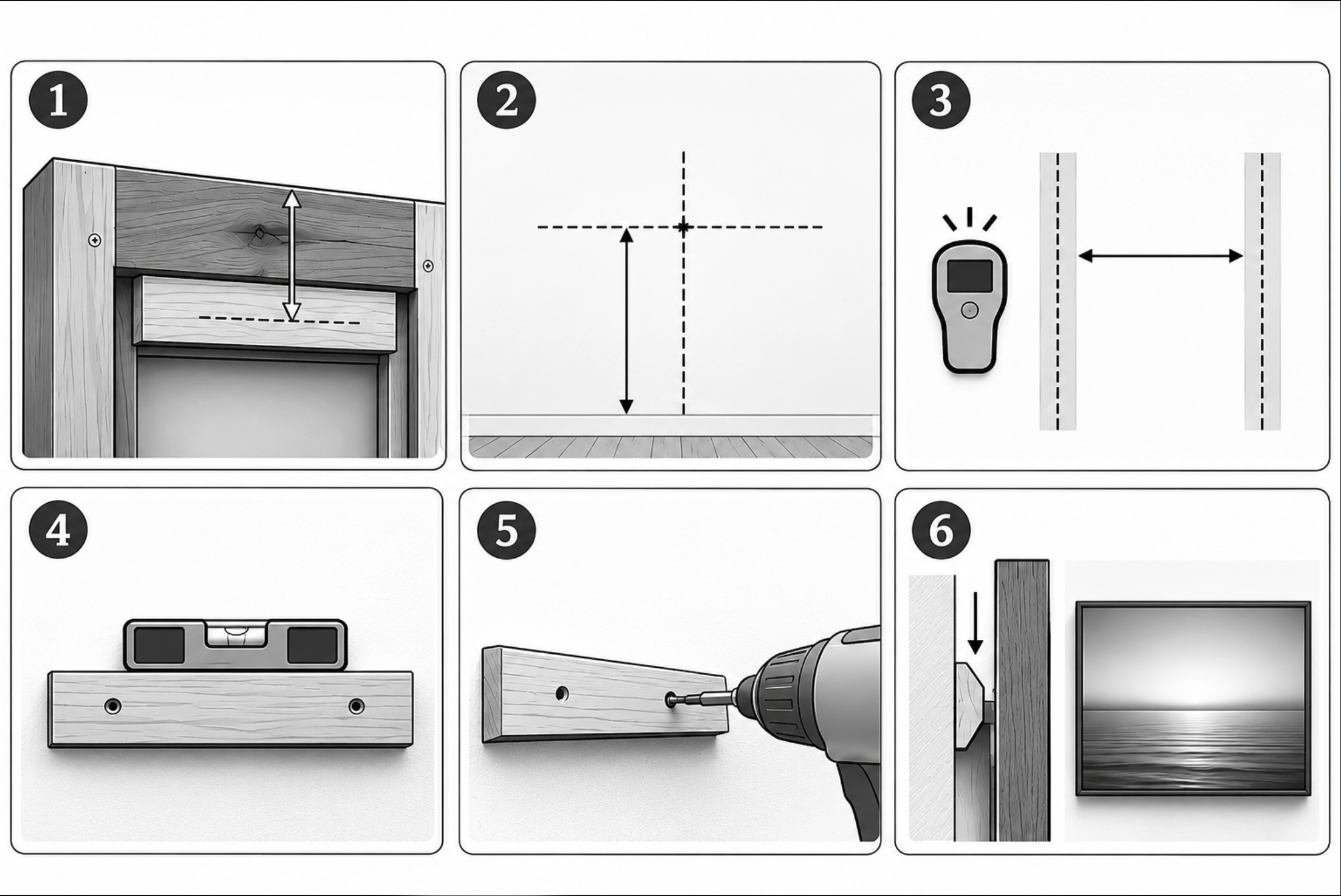
Measure the cleat position. Fit the supplied, unattached cleat into the recessed bevel on the back of the frame. While the two pieces are engaged, measure the distance from the top of the frame to the center of the unattached cleat. This measurement will determine the correct mounting height on the wall.
Determine the hanging location. Mark the desired horizontal center of the artwork on the wall. As a general guideline, artwork should be hung with its center approximately 57" above the floor. Using your measurement from Step 1, determine and mark the corresponding vertical position of the wall cleat.
Locate wall studs. For heavier artwork, locate and use wall studs whenever possible. If stud placement does not align with your desired hanging location, use appropriately rated wall anchors suitable for your wall material and the weight of the artwork.
Position and level the cleat. Center the wall cleat at your marked horizontal position and align its top edge with the marked vertical position. Use a bubble level to ensure the cleat is level.
Secure the wall cleat. Drill pilot holes as needed and fasten the cleat securely to the wall using appropriate mounting hardware.
Hang your artwork. Carefully lift the artwork, align the recessed bevel on the back of the frame with the wall cleat, and lower it into place. Confirm that the artwork is fully seated, secure, and level.
Maintenance and Care
-
Your photograph is finished with a protective varnish designed to provide durability and UV resistance. To maintain the appearance of the print, gently remove dust using a clean, soft, lint-free microfiber cloth.
Avoid household cleaners, glass cleaners, solvents, chemical sprays, paper towels, or abrasive materials, as these may damage the protective surface. Never apply cleaning products directly to the artwork.
If additional cleaning is necessary, contact the artist for recommendations before attempting to clean the surface.
-
For optimal preservation, display your artwork in an interior environment with relatively stable temperature and humidity levels.
Avoid hanging artwork in locations exposed to excessive moisture, condensation, or significant temperature fluctuations, such as bathrooms, near fireplaces, or directly above heating and cooling vents.
Maintaining a consistent indoor environment will help protect the print, mounting materials, and frame over time.
-
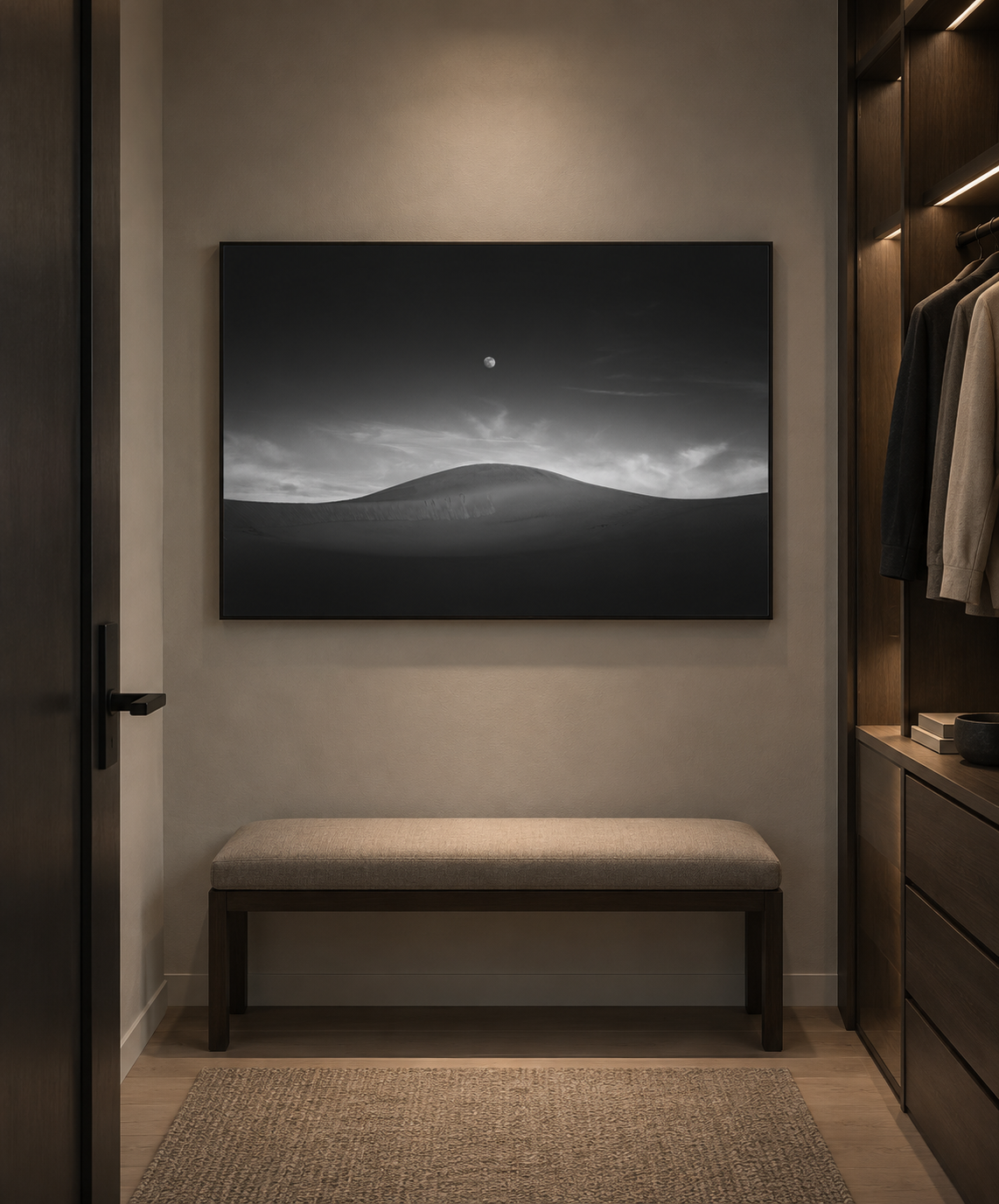
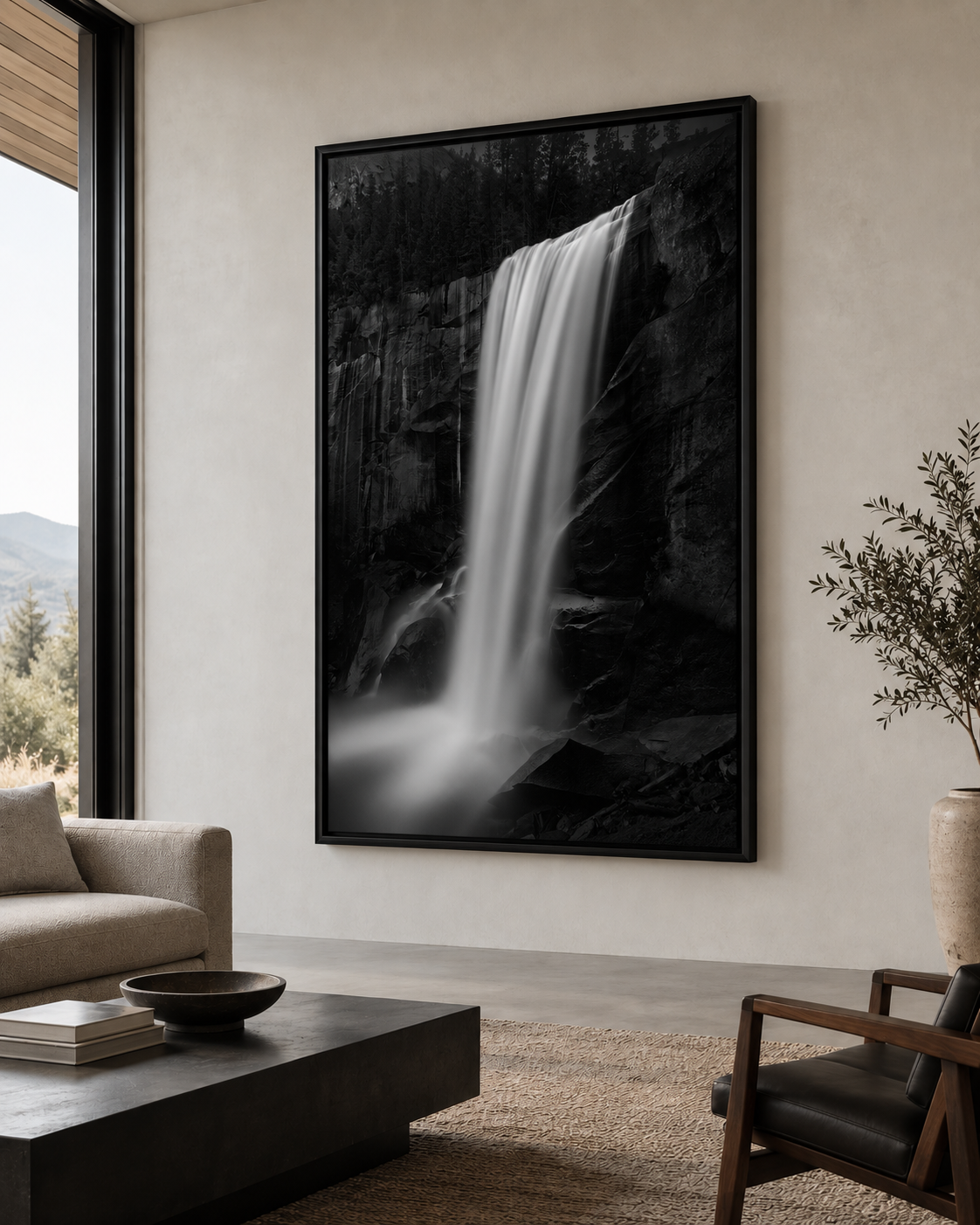
Proper lighting enhances the depth, tonal range, and overall presentation of your artwork. A combination of directional spotlights and broader, diffused lighting can help illuminate the photograph evenly while minimizing glare and distracting reflections.
The ideal lighting arrangement will depend on the size of the artwork, room layout, and distance between the artwork and light fixtures. Consider consulting a lighting professional or electrician to achieve the best results.
When selecting a location for your artwork, avoid areas exposed to prolonged direct sunlight or excessive heat. Although the print surface is protected with a UV-resistant varnish, limiting prolonged exposure to direct sunlight will help preserve its color and tonal quality over time.
-
Always handle your artwork with clean, dry hands and, whenever possible, have two people assist when moving larger pieces.
Grip the frame securely along its sides when lifting or repositioning the artwork. Avoid placing pressure on the photographic surface or touching it unnecessarily.
When transporting or storing artwork, use appropriate protective packaging and avoid exposing it to excessive heat, moisture, or extreme temperature fluctuations.
Questions About Your Artwork?
If you have questions regarding installation, care, or maintenance of your artwork, please don't hesitate to get in touch.
Jonathan Knight
gallery@jonathanknight.net
jonathanknight.net