It’s okay to cry…
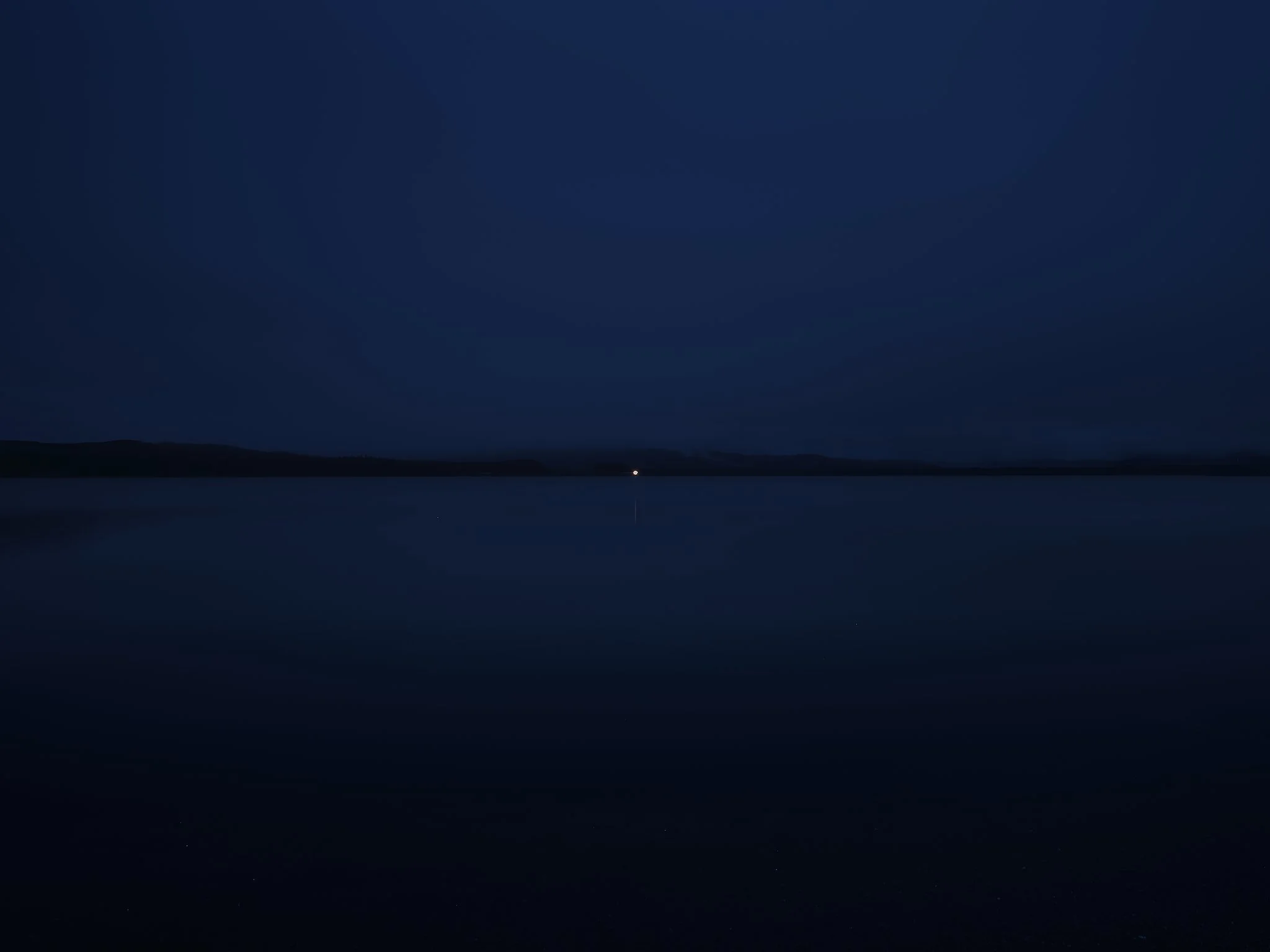
Every once in a while, someone cries in front of one of my photographs.
It is one of the most unexpected—and meaningful—things that has happened to me as an artist.
Usually, I don't know what to say. Sometimes they tell me why. Sometimes they simply stand there for a while and then walk away.
I've come to realize that the photograph itself probably isn't what makes them cry.
It opens a door.
Mark Rothko famously spoke about people weeping in front of his paintings. He believed that art could reach something beneath language—something deeply human that we don't always know how to articulate.
That idea has stayed with me.
Because photography is often assumed to be about recognition.
I know that place.
I've been there.
That's beautiful.
But I'm much more interested in what happens after recognition.
A photograph of a waterfall is, on the surface, simply a photograph of a waterfall. But perhaps it reminds someone of a place they visited with a parent who is no longer alive. Perhaps the movement of the water recalls a difficult period in their life. Perhaps the darkness feels familiar. Perhaps, for reasons they can't explain, the photograph simply gives them a moment of stillness.
The photograph becomes a container for something that was already inside them.
That may be why two people can stand in front of the same photograph and have completely different experiences.
One person sees a waterfall.
Another sees grief.
Another sees peace.
Another sees a memory.
Another doesn't know what they see at all—they just know that something happened.
I think that uncertainty is important.
The work I make is intentionally quiet. I remove as much information as I can. I'm not trying to tell you exactly what to feel or give you a perfectly packaged story about what an image means.
Instead, I want to leave enough space for you to enter it.
This is part of why scale matters to me, too. A photograph that fills your field of vision behaves differently from one you glance at across a room. It can stop being an image of a landscape and become an experience of its own.
That's what I hope happens with my photographs.
Not that everyone cries.
Not even that everyone likes them.
But that, for a moment, the photograph gets past the part of your brain that is busy identifying, evaluating and categorizing everything.
And something more personal takes its place.
Maybe that's why those moments stay with me.
I made the photograph. I chose the place, the composition, the exposure, the darkness, the silence.
But whatever happens after that belongs to the person standing in front of it.
And perhaps that is one of the most powerful things art can do:
give us a place to encounter something we already carry inside ourselves.